
Last time I described three settings from which we had to choose one - space, the underwater world, and floating islands.
The first setting we ruled out was the underwater world.
It was a difficult decision because the concept art looked beautiful, and the setting itself felt quite unique, especially for this genre. However, we struggled to come up with a wide variety of character concepts. Heavy diving suits would make male and female heroes look quite similar, reducing visual diversity.
The setting would also limit our choice of visual effects. Things like glowing projectiles, sparks, and magical flashes would look strange underwater. Explosions could work, but underwater explosions have a very distinct appearance, which would require additional effort to get right.
Most importantly, underwater movement simply did not feel as dynamic as we wanted. Everything beneath the surface appears slower. Objects quickly lose momentum due to water resistance, and movement lacks the speed and energy that our gameplay was built around.
That left us with two contenders: space and floating islands. Both of these settings had their pros and cons, so we decided to try them both.
We decided to explore the floating islands first. What attracted us most was the complete freedom it offered in character design. The fantasy setting also allowed us to use any form of magic we wanted, making spells and visual effects much easier to implement.
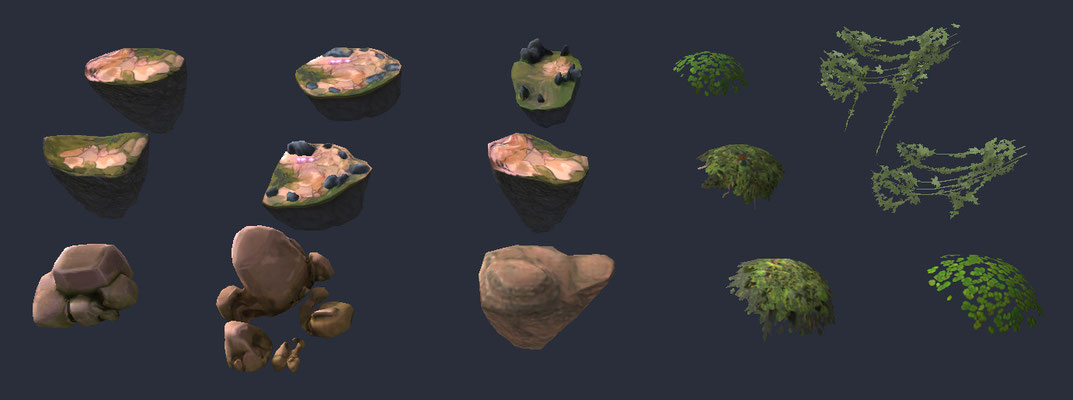
Since we already had a functional prototype, we chose to test the idea directly in 3D. We quickly created a handful of themed assets:
And assembled a small environment from them:
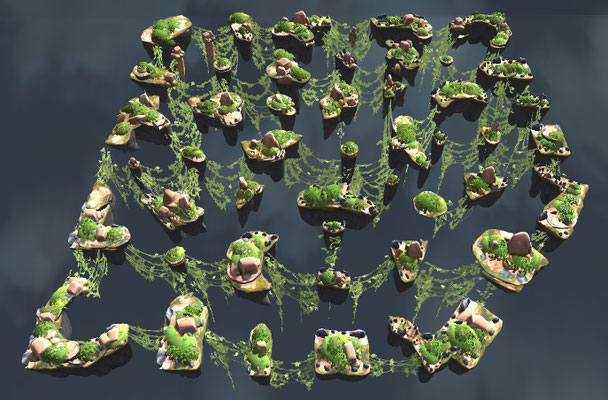
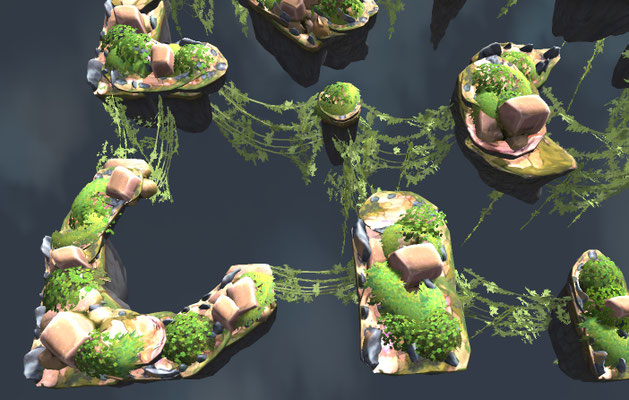
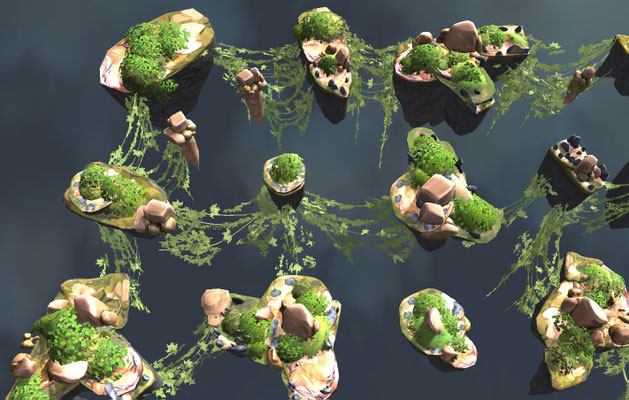
The result was... underwhelming.
One of the biggest problems was the background. A sky filled with nothing but clouds felt bland and uninspiring. At the same time, we could not simply add a detailed view of the planet below, as shown in the original concept sketch. Such a bright and visually busy backdrop would make the action in the foreground much harder to read.
As an alternative, we experimented with a darker lighting setup. By keeping the background in shadow and avoiding high-contrast details, the heroes would stand out much more clearly against the environment.
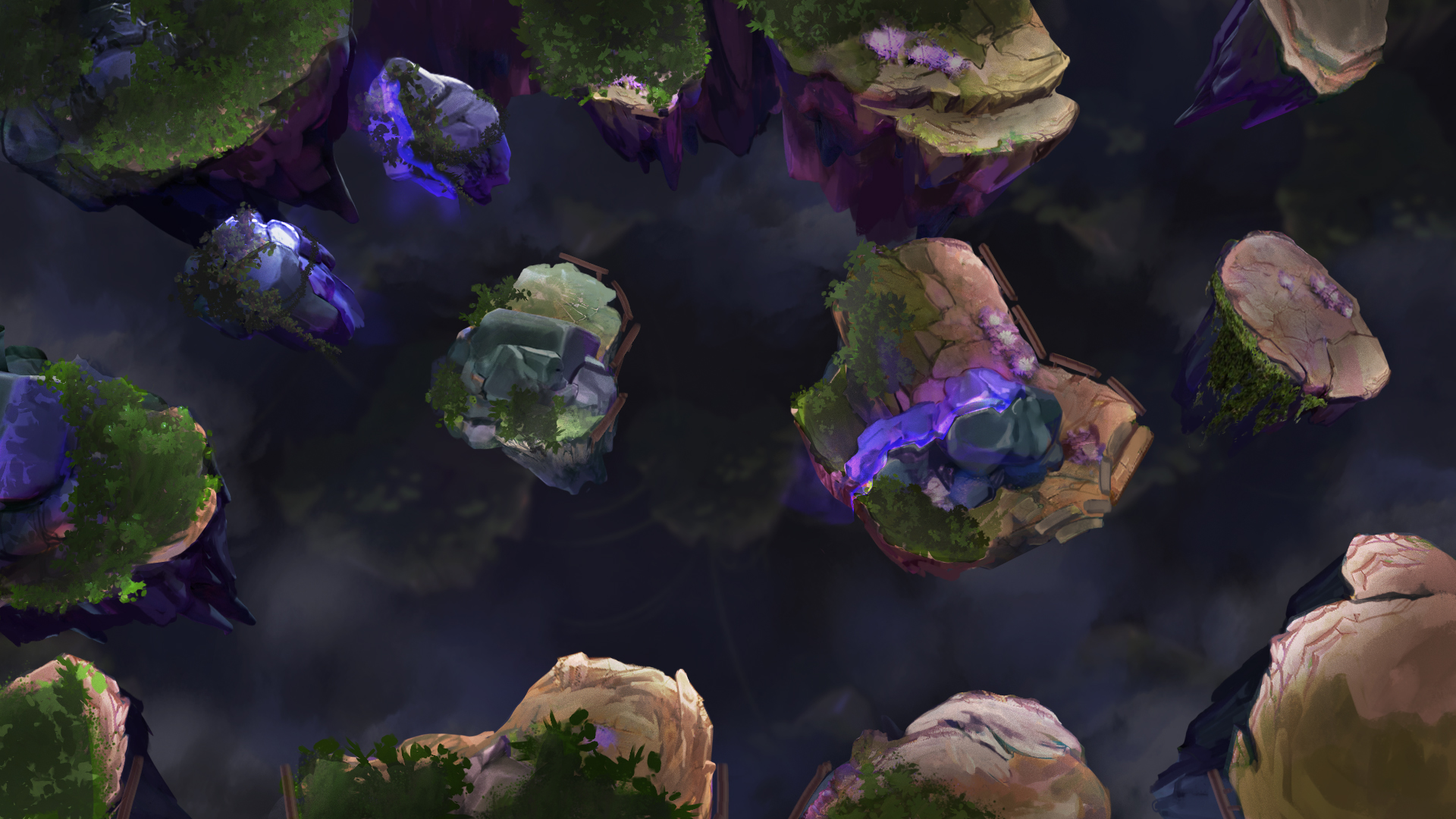
A darker scene also opened up opportunities for additional visual variety. We could populate the islands with glowing mushrooms, luminous crystals, swarms of fireflies, and other light-emitting elements.
To make the islands themselves more interesting, we began incorporating the ruins of an ancient civilization.
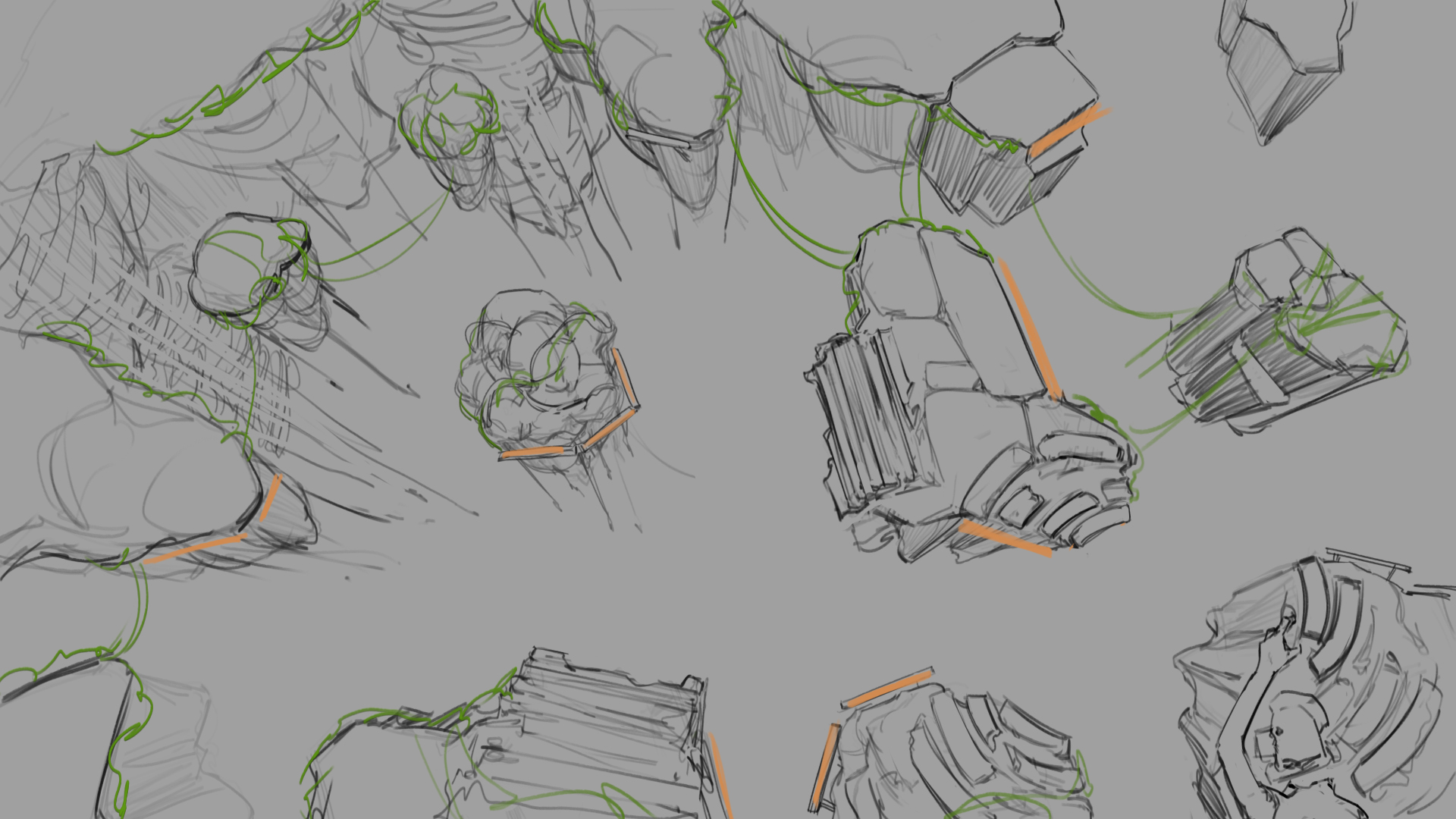
Overall, this version was perfectly acceptable, but it never generated any real excitement within the team.
On top of that, we came across Supervive, a game whose visuals looked surprisingly similar to what we were building.
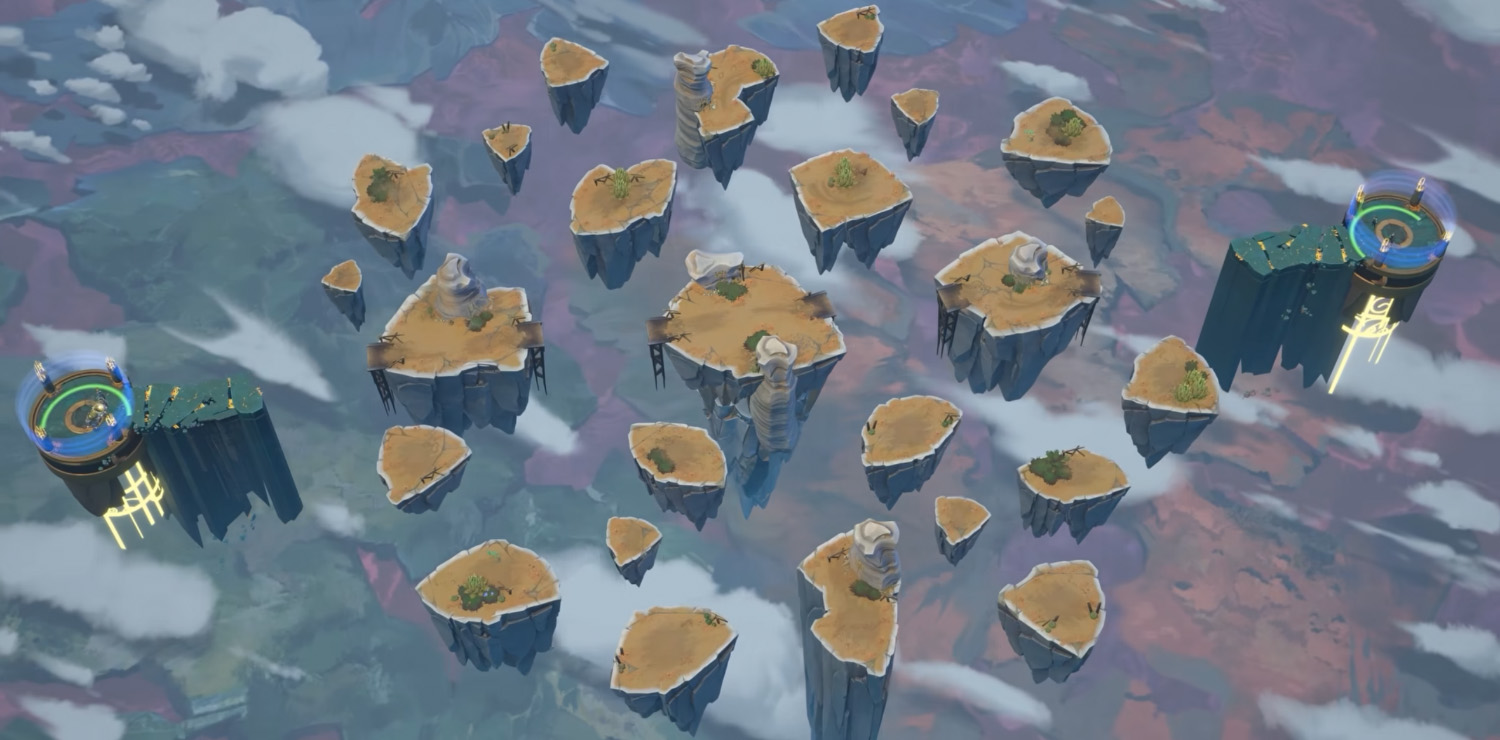
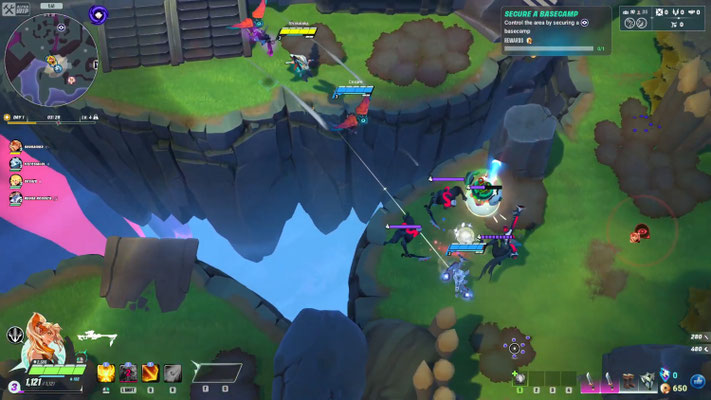
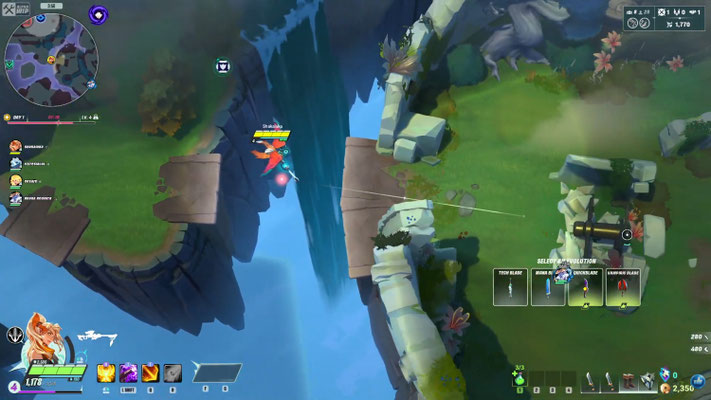
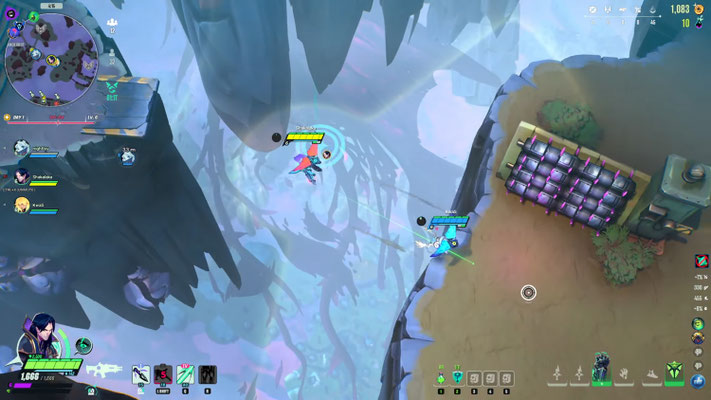
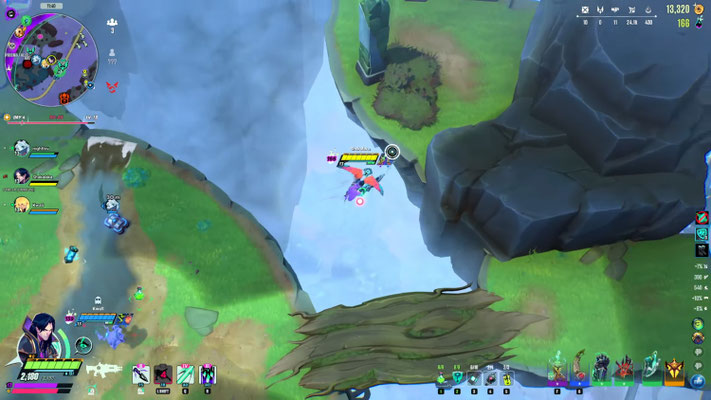
While preparing this blog post, I looked the game up and was surprised to learn that it had already been shut down. What made that especially shocking was the pedigree of the team behind it – many of the developers had previously worked on League of Legends and Dota 2.
In a postmortem article, one of the developers explained that he believed the game's failure stemmed from its attempt to combine two very different genres while maintaining a steep learning curve. When developers blend multiple genres, they often hope to attract the combined audiences of both. In reality, the opposite tends to happen. Instead of reaching the union of those audiences, the game appeals only to their intersection – players who enjoy both genres simultaneously.
Because the team consisted of experienced developers with deep roots in the MOBA genre, they were also highly skilled players themselves. During development, they spent countless hours testing every mechanic and gradually mastered all of them. As a result, it constantly felt as though the game could support yet another feature, another mechanic, another layer of complexity.
From their perspective, every addition seemed to make the game better.
For new players, however, the experience was very different. The game eventually accumulated so many systems and mechanics that newcomers struggled to understand and manage them all. Many lost interest before they had a chance to appreciate what made the game special.
Stories like this genuinely worry me. Whenever I see experienced developers with substantial budgets creating their dream game and still failing, I can't help but imagine myself in the same position.
At the same time, there is something reassuring about this particular example. The problems described in that postmortem were not unfamiliar to me – I had already written about many of them in previous posts. In fact, those very concerns were the reason I ended up completely redesigning the gameplay several times throughout development.
Write a comment