
At this point, the core gameplay was essentially complete. Matches felt like a full-fledged experience: they were fun, engaging, and easy to follow even for someone watching from the sidelines. It was time to show the game to the publisher.
As before, I planned to prepare a proper gameplay trailer for them, but things turned out to be much simpler. During one of our discussions, I casually showed what we had built, and the project was approved almost immediately. There was only one piece of feedback: the visuals needed improvement. Without strong visuals, we would be trying to sell nothing more than a game concept on Kickstarter. With appealing graphics, attracting people's attention would be significantly easier.
From that moment on, I put gameplay development aside and shifted my focus to content production. While gameplay experimentation required little more than playtesters, creating actual content demanded at least a small team.
Fortunately, a few people I already knew stepped in to help. A 2D artist and a 3D modeler who had previously worked on Force of Nature 2 joined the project. In addition, one of our playtesters turned out to be a remarkably talented artist and was eager to contribute as well.
Our first task was to decide on the game's setting.
Players leap from platform to platform, freely traversing a world without gravity. We came up with three different ways to explain this behavior and began creating concept sketches for each of them. To make the comparison easier, we chose a small section of a map and reimagined it in several different settings. As a result, the sketches below all depict the same area, interpreted through different thematic lenses.
Space
The first setting that comes to mind whenever someone hears the phrase "zero gravity" is, of course, space.
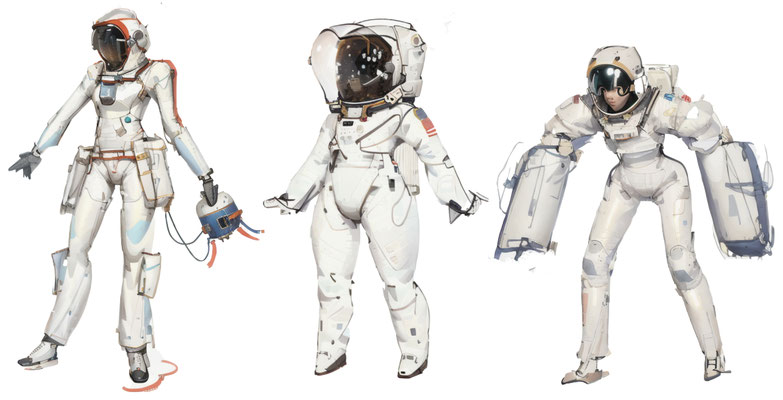
The action could take place in open space or in orbit around a planet. Characters wearing spacesuits push off from fragments of a space station and drift freely through the void, using jetpacks to adjust their trajectory and maneuver between platforms.
The visual style could lean toward a more realistic depiction of space:
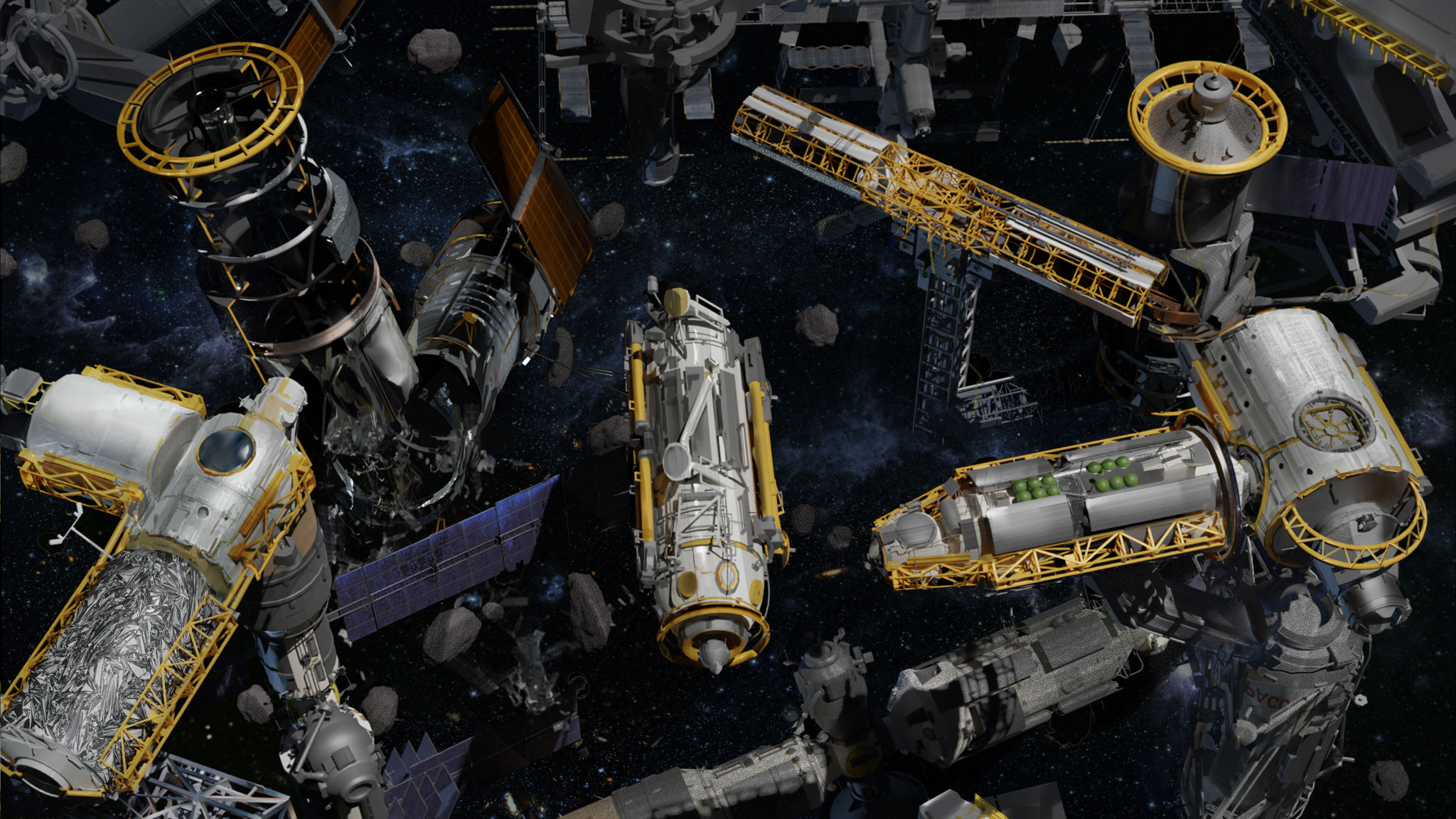
Or embrace a more sci-fi aesthetic:

The heroes themselves could wear a variety of different spacesuits:


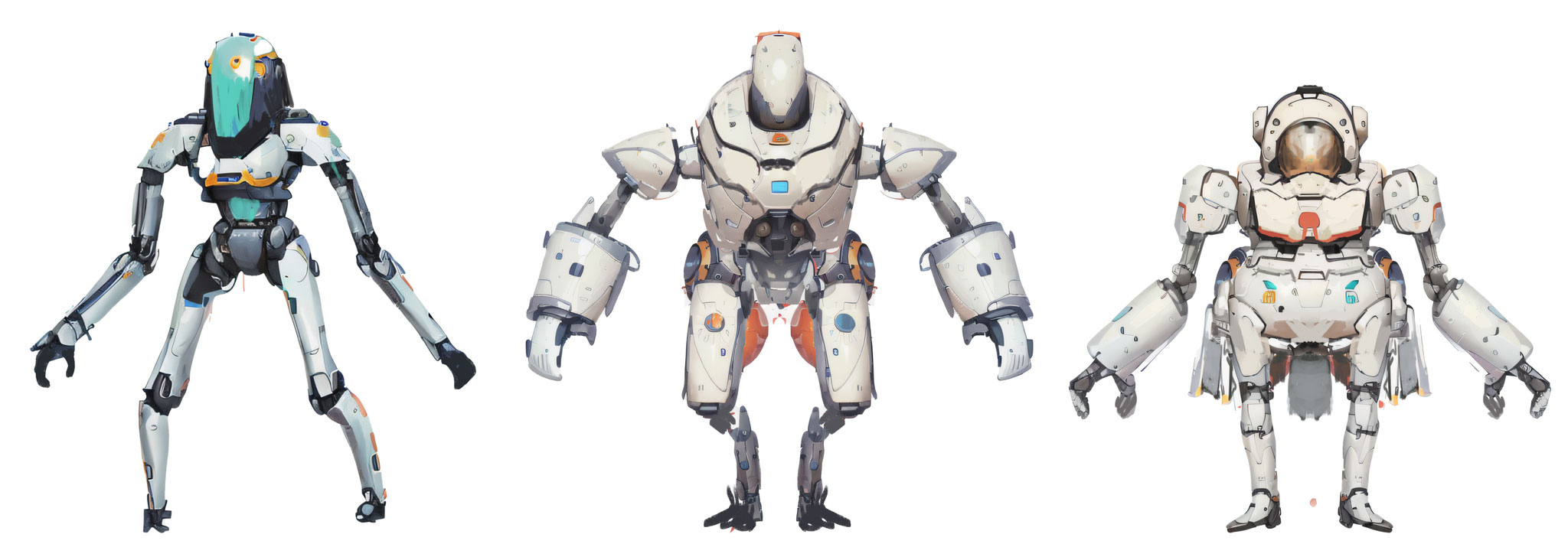
Another option would be to use robots as playable characters. This would greatly expand the range of possible silhouettes and designs, since robots can take virtually any form.

This setting is intuitive and fits the core gameplay mechanics exceptionally well. However, let's explore some other possibilities before making a final decision.
Underwater World
The second way to explain the characters' ability to move freely through space was to place them underwater.
In this version, the game would take place on the ocean floor, surrounded by coral reefs, seaweed, schools of fish, and the ruins of a long-abandoned underwater facility.
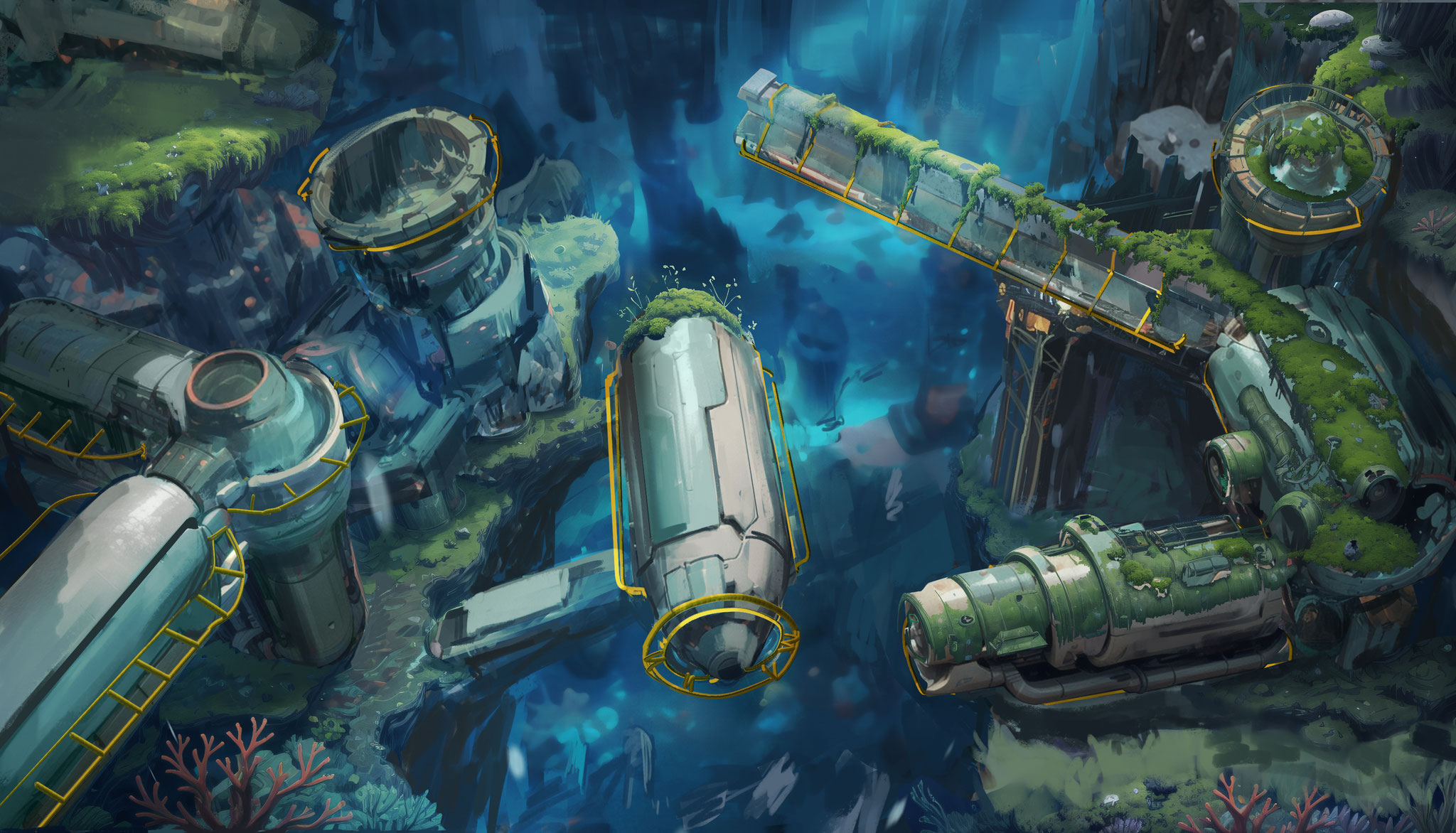
The characters could still wear suits, though not spacesuits this time. Instead, they would use diving gear and deep-sea exploration equipment.
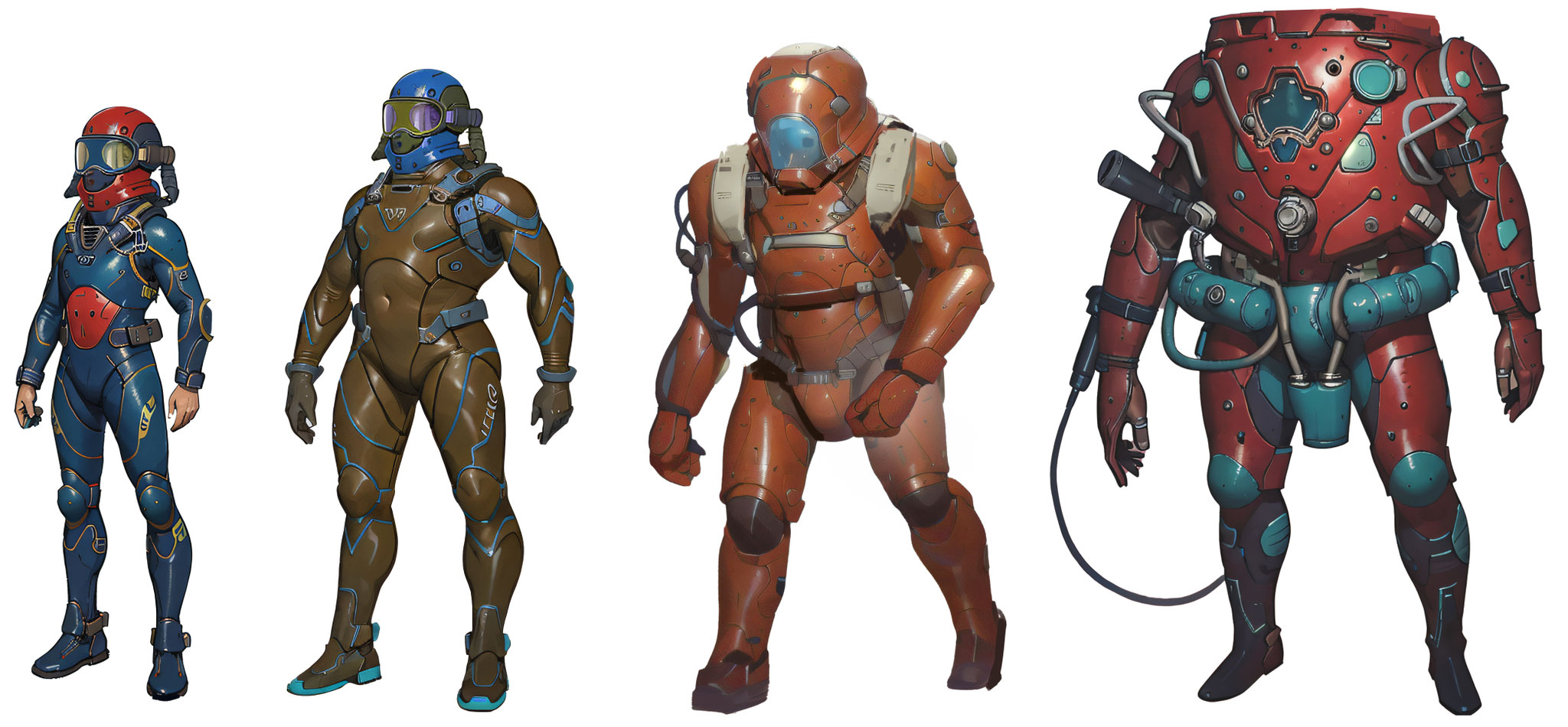
Floating Islands
Our third option was a world of floating islands, similar to those seen in the movie Avatar. The action would take place high above a planet's surface, in a region where gravity somehow does not apply, allowing characters to fly freely between islands.

Since this is a fantasy setting, our heroes would not require any specialized equipment. This gave us complete freedom when it came to character design. Virtually any type of hero would fit naturally into the world, much like the diverse casts of League of Legends or Dota 2. Because of that, we did not create any dedicated character sketches for this setting – there are already countless examples of suitable fantasy archetypes available online.
Write a comment