
I often watch game reviews, and at one point I came across Dome Keeper. What caught my attention was the way the hero collects resources: they tether them with elastic bands, causing the resources to trail behind the character. The player must then physically haul them back to base.

The way these resources respond to changes in the hero’s movement creates a powerful sense of physical presence – precisely the kind of tactile feeling I value so highly in my project. So I decided to adopt a similar mechanic.
From that point on, simply touching a resource was no longer enough. Upon contact, the resource enters an active state and begins trailing the player who captured it, colliding with other resources and with the level’s walls along the way. The player must bring the resource to one of the collection points to score.
Interaction with enemy resources was also expanded. Previously, touching them would merely push them away. Now, contact with an enemy resource destroys it entirely. This allows players to actively interfere with each other’s deliveries – disrupting attempts to score and earning points by denying the opponent’s efforts.
Mega Bombs
The combat changes created the feeling of a brawl between heroes – but that alone wasn’t enough. To truly engage players, the game needed to feel like a battle, a struggle over a meaningful, overarching objective. Simply collecting resources for points wasn’t compelling enough.
That’s when we introduced Mega Bombs.
By collecting resources, players earn points that can be spent to create a Mega Bomb and launch it toward the enemy base, damaging it upon detonation. The scoring system follows a tug-of-war principle. The “rope” starts in a neutral position. Each resource collected by one team shifts it one unit in their direction, while each resource collected by the opposing team shifts it one unit the other way.
To create a Mega Bomb, a team must gain a five-point advantage – in other words, pull the rope five units to their side. Once they do, a player must fly to one of the resource receivers and press a large red button.
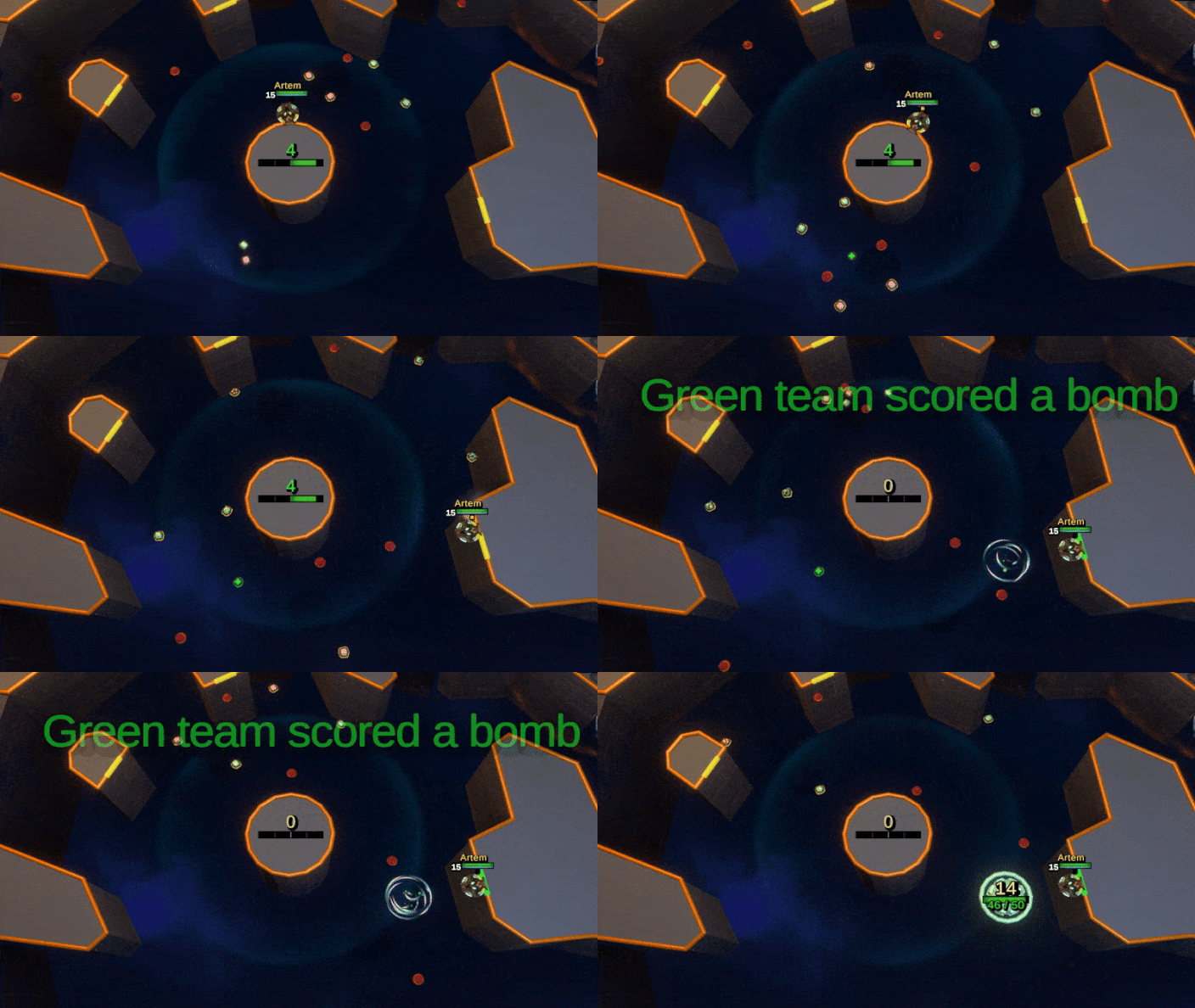
The Mega Bomb has a limited lifetime before it detonates automatically. During that time, the team that created it must push it toward the enemy base, while the opposing team tries to stop them.
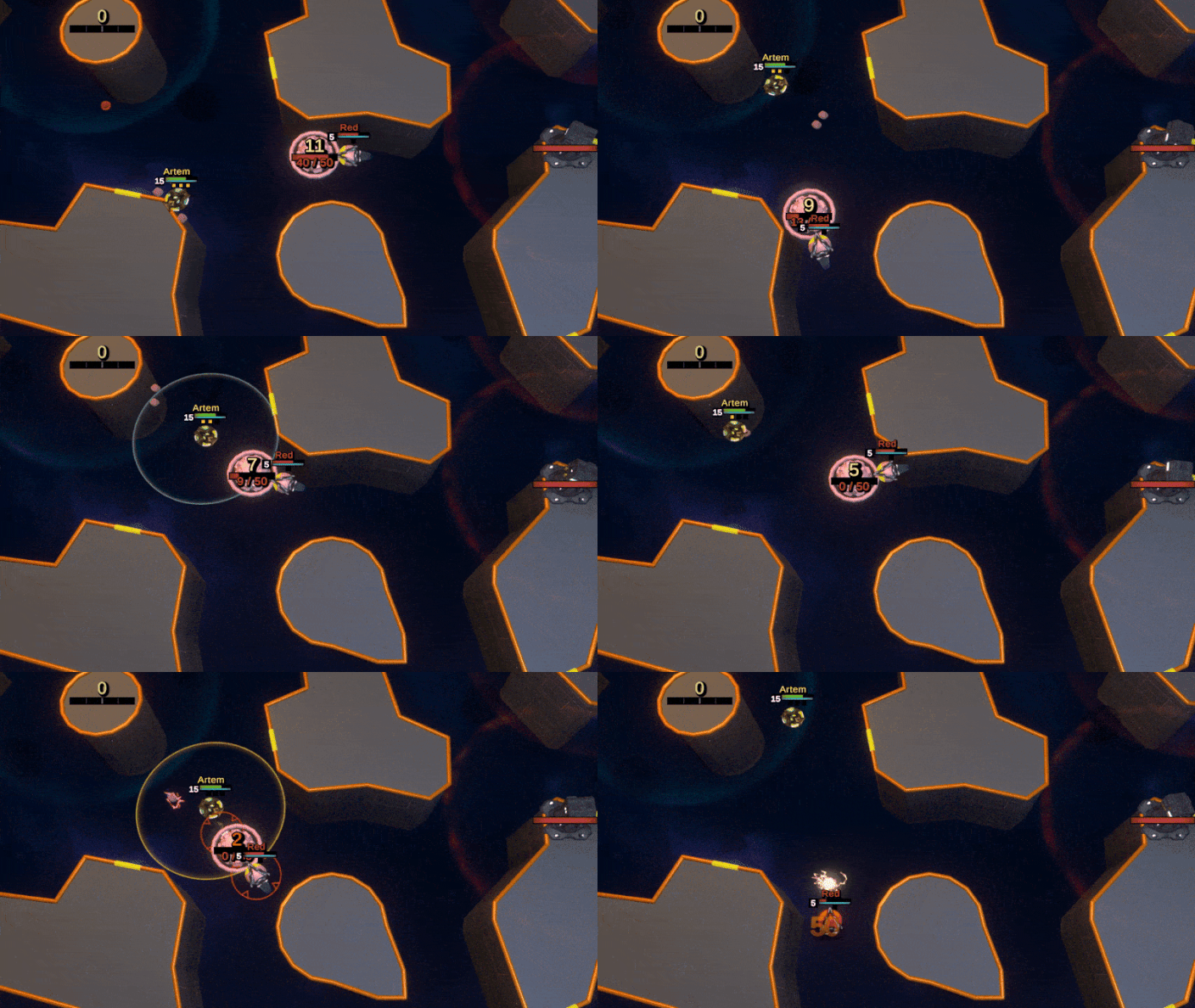
To control the bomb, a hero grabs onto it as if it were a wall and physically pushes it toward the opponent’s base, where it must explode to deal damage.
Controlling the Mega Bomb is far from easy. It has significant inertia and is difficult to turn sharply. The level is also designed so that it’s impossible to move it straight from the resource spawn point to the enemy base without maneuvering.

Meanwhile, the opposing team can interfere. The Mega Bomb has its own health pool, and the less health it has at the moment of detonation, the less damage it deals. Its health gradually decreases over time, so the faster a team delivers it, the more damage it will ultimately cause.
Opponents cannot damage the Mega Bomb directly, but they can collide with it using their bodies, physically obstructing its movement. They can try to knock the controlling player away with a brick. And if an enemy player is dragging resources behind them, one of those resources will immediately peel off and attack the Mega Bomb, dealing a small amount of damage.
Mega Bomb Levels
A team needs at least 5 points to summon a Mega Bomb. However, they are not required to trigger it immediately – they can continue accumulating points. The more points invested into the bomb (up to a maximum of 10), the stronger it becomes.
Higher-level bombs have more health and a longer detonation timer, giving the team more time to push them to the enemy base (although once the bomb reaches the base, it explodes instantly, without waiting for the timer).
Importantly, the base damage potential of the Mega Bomb does not scale with its level. However, since higher-level bombs start with more health, they are more likely to retain more health upon arrival – and therefore deal greater effective damage.
But that’s not all.
At higher investment thresholds, the bomb gains additional properties. If 7 or more resources are invested, the bomb generates a repulsion field that pushes opponents away, making it much harder for them to block it or interfere using resources.

If the full 10 points are invested, the bomb leaves behind a poisonous trail that damages and poisons enemies caught within it. At the same time, the player who controls the bomb will receive healing as long as he touches the bomb.
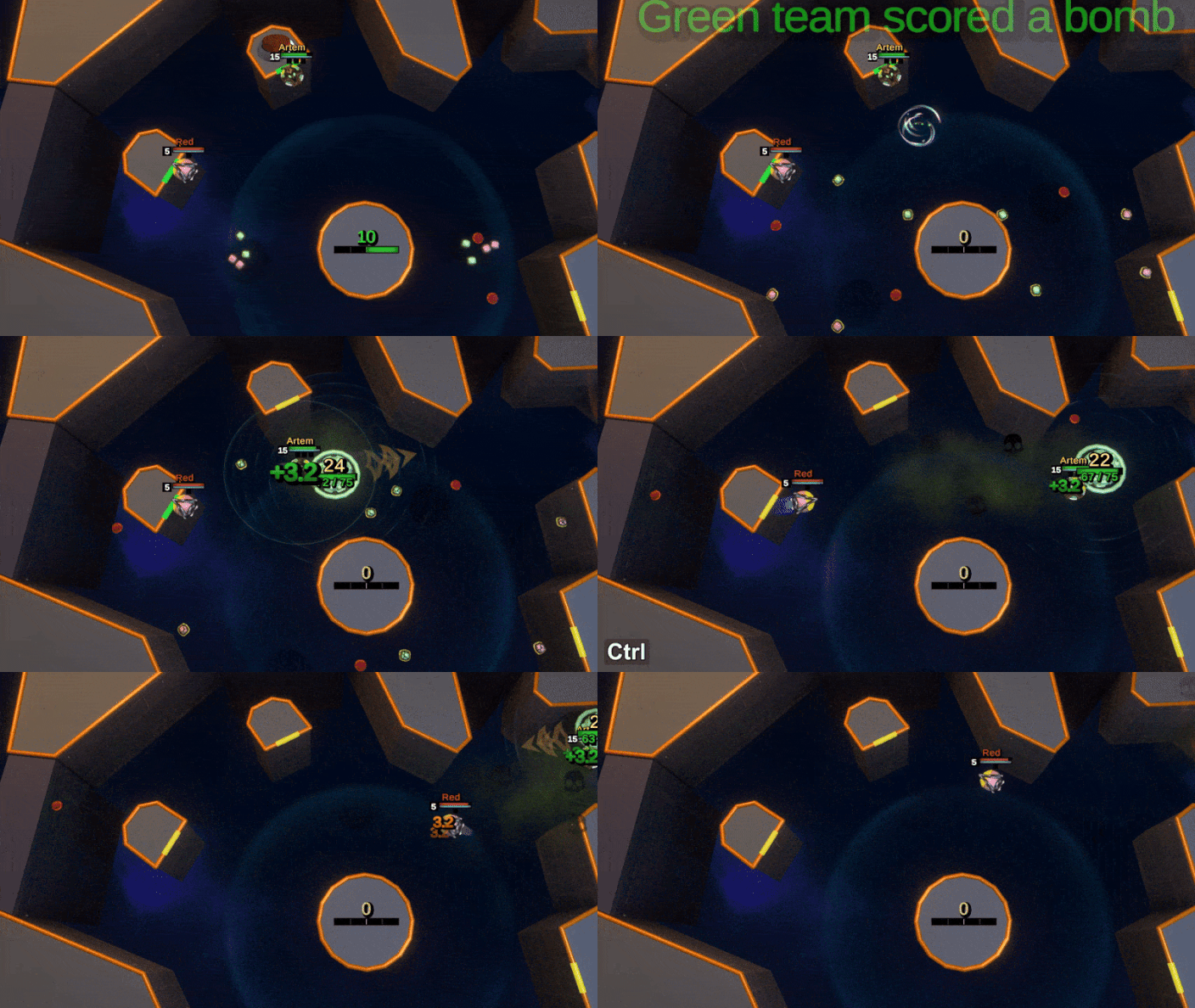
When a Mega Bomb appears, resources stop spawning, forcing all players to shift their focus entirely to it.
This method of attacking the enemy base through the Mega Bomb also produced another valuable effect I mentioned in one of my earlier posts – a sawtooth-shaped stress curve. The gameplay naturally breaks into alternating phases with distinct dynamics. First, both teams concentrate on gathering as many resources as possible while preventing their opponents from doing the same, all the while looking for an opportunity to deal meaningful damage. Then, once a Mega Bomb is summoned, one team attempts to escort and protect it, while the other does everything it can to destroy or disrupt it. After that, the cycle begins again.
Resource collection is more methodical and controlled, whereas pushing the bomb is aggressive, risky, and far more intense. It’s during these moments that the real breakthrough potential emerges – the opportunity to significantly advance toward victory in the match.
Unfortunately, at that time we weren’t yet recording full matches, so I can’t showcase complete gameplay footage. Still, with all these additions, the game had already become dramatically more exciting to play.
Write a comment